
Why ADAS Sensors Matter After Collision Repair
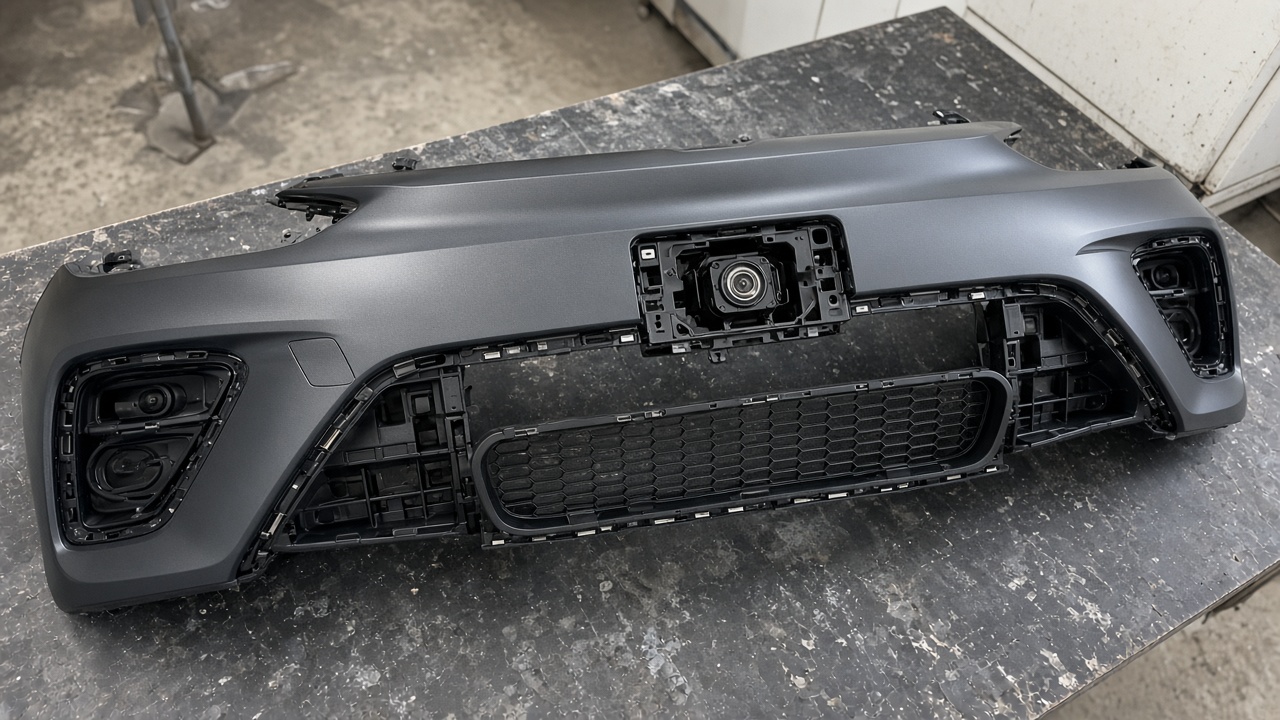
Most newer cars rely on cameras, radar and sensors for safety features you may use every day without thinking about it. Many of those parts sit in exactly the places a collision damages first: the bumper covers, grille, side mirrors and windshield. That means a repair that looks finished on the outside may still need attention underneath. This guide explains what advanced driver assistance systems (ADAS) are, why collision repair can affect them, what calibration means and what to ask your body shop before you pick up your car.
What ADAS includes
Advanced driver assistance systems are the features that help a driver see, warn and sometimes react. Common examples include:
- Lane departure warning and lane-keeping assist
- Automatic emergency braking and forward collision warning
- Adaptive cruise control
- Blind-spot monitoring and rear cross-traffic alerts
- Parking sensors and backup or surround-view cameras
These features depend on cameras mounted behind the windshield or in the mirrors, radar units behind the bumper cover or grille, and ultrasonic sensors set into the bumpers. Each one is aimed at a specific angle so the system can judge distance and position correctly.
Why collision repair can affect ADAS
A radar or camera only works as designed when it points exactly where the manufacturer intended. Even a small change can matter. A minor bump can bend a mounting bracket. Replacing a bumper cover means sensors are removed and reinstalled. A new windshield means the forward camera has to be re-mounted. Structural repairs, suspension work and wheel alignment can also change the angle the car sits at, which changes what the sensors see. Paint thickness on certain bumper areas can matter too, which is one reason manufacturers publish specific repair procedures for these parts.
What calibration does
Calibration is the process of re-aiming a sensor or camera so it reads the road the way the manufacturer specifies. There are two common methods:
- Static calibration is done in a controlled space with targets placed at measured distances from the vehicle.
- Dynamic calibration is done by driving the vehicle under specific conditions while a scan tool guides the process.
Some vehicles need one method, some need both. A diagnostic scan before and after the repair helps identify fault codes and confirm the systems are communicating properly. The right steps depend on the make, model and the parts involved.
When calibration is usually needed
Vehicle manufacturers list when calibration is required. Common triggers include:
- Removing or replacing a bumper cover that houses sensors
- Windshield replacement on a car with a forward-facing camera
- Replacing a sensor, camera, mirror or mounting bracket
- Structural or frame repairs
- Wheel alignment or suspension changes on some models
Signs your sensors need attention
After any repair or minor bump, watch for warning lights on the dash, lane-keeping that drifts or tugs the wheel unexpectedly, adaptive cruise that brakes at the wrong time, parking sensors that beep at nothing, or a backup camera image that looks off-center. Any of these can mean a camera or radar is aimed slightly wrong. Bring the car back to the shop that did the work and ask for a scan and a calibration check.
Questions to ask your body shop
- Will my repair affect any sensors or cameras?
- Do you follow the manufacturer's repair procedures for my vehicle?
- Will you scan the vehicle before and after the repair?
- Is calibration included in the estimate, and is it done in-house, at a dealer or by a specialist?
- Will I receive documentation showing the calibration was completed?
Keep any scan or calibration report with your repair records. It shows the safety systems were checked after the repair and is useful if questions come up later.
How insurance usually handles calibration
When calibration is required as part of a covered repair, it is typically listed as a line on the estimate. If additional needs show up during teardown, the shop documents them and submits a supplement to your insurer. Texas law gives you the right to choose your own body shop, so you can pick a shop you trust to handle these details.
Repairs done to manufacturer procedures in Conroe
SS Paint & Body Repair at 335 Woodland Hills Dr in Conroe handles collision repair and bumper and scratch repair for drivers across Montgomery County. Our technicians are I-CAR Gold Class certified, a training level that includes advanced driver assistance systems and OEM-specific repair procedures, and every repair is backed by our Limited Lifetime Workmanship Warranty. We communicate directly with your insurance company and will tell you up front whether your repair is likely to affect any sensors.
Frequently asked questions
Do I need ADAS calibration after a bumper repair?
Often, if sensors were removed, replaced or affected by the damage. Whether it is required depends on your vehicle manufacturer's procedures.
Is calibration covered by insurance?
When calibration is required as part of a covered repair, it is usually included in the estimate or added through a supplement.
What happens if sensors are not calibrated?
Safety features may not work as intended. Warnings can come too late or too early, and some features may switch off.
Can a minor bumper bump affect sensors?
Yes. Even a small impact can move a radar or camera bracket enough to affect how the system reads the road.
How do I get an estimate?
Call (936) 581-4556 or contact us to schedule a free estimate at our Conroe shop.