Signs Your Car Has Frame Damage
Frame or unibody damage affects how your car protects you, not just how it looks. After a collision, even one that seemed minor, it is worth knowing the signs of structural damage and how a body shop checks for it.
Signs to watch for
- The car pulls to one side or the steering wheel is off-center
- Doors, the hood or the trunk do not close or line up correctly
- Uneven gaps between panels
- Unusual or uneven tire wear
- Creaks, rattles or wind noise that were not there before
- The car sits lower on one corner
Any one of these can have another cause, such as a bent suspension part or an alignment problem. Together, or right after a crash, they are a reason to have the structure measured.
Why frame damage matters
Most modern cars use a unibody structure, where the frame and body work together. That structure is designed to absorb crash energy in a specific way and protect the people inside. If it is bent and not repaired to factory specifications, the car may not protect you as designed in another collision. Alignment, handling and tire wear can also suffer.
How shops measure frame damage
Shops use measuring systems that compare key points on your car's structure with the manufacturer's specifications. This shows exactly where the frame or unibody is out of position and by how much. Ask your shop for the before-and-after measurements for your records.
How frame straightening works
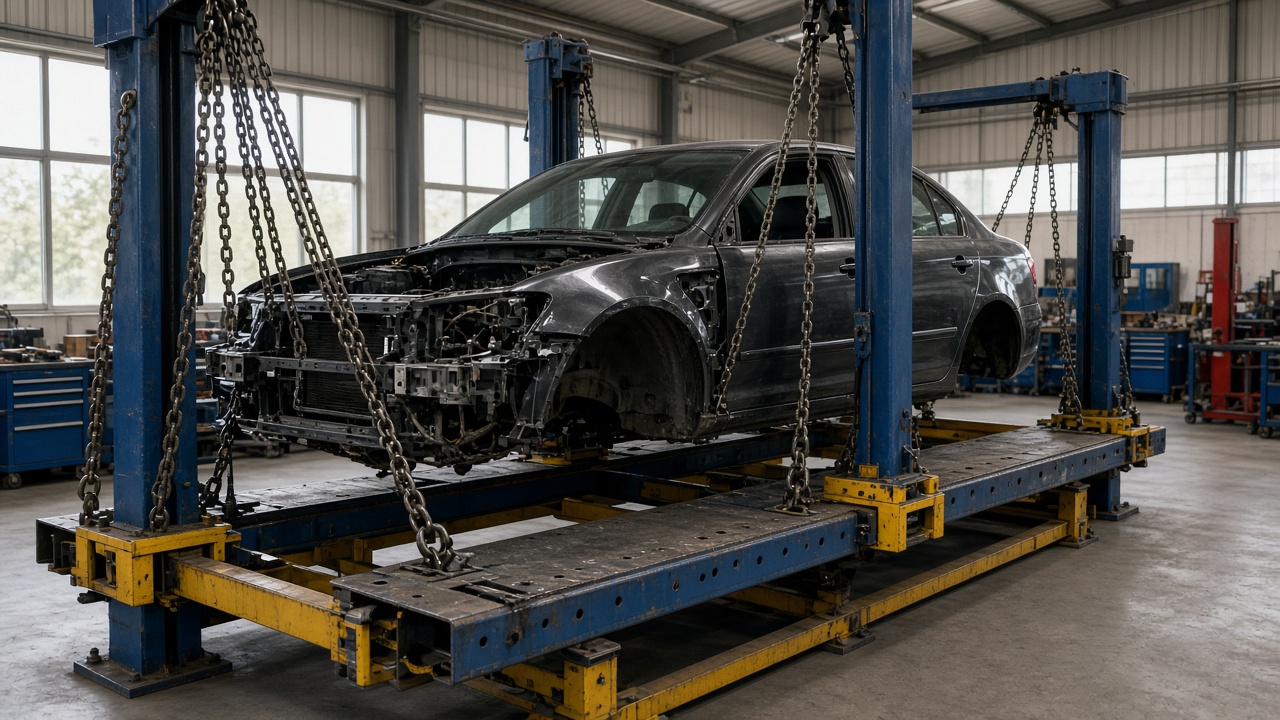
Frame straightening uses a frame machine and controlled hydraulic pulls to bring the structure back into specification. Some damaged parts cannot be straightened and must be replaced instead. After the repair, the car is measured again to confirm it is correct. Learn more about our frame straightening and collision repair services.
Insurance and frame damage
Frame repairs are usually part of a collision claim. Make sure the estimate includes measuring and structural repair if needed. In Texas, you have the right to choose your repair shop.
Tips to protect your car and your claim
- Take photos early. Photograph damage as soon as it happens and before anything is moved or cleaned.
- Keep your paperwork together. Save the claim number, adjuster's name, estimates, supplements and receipts in one place.
- Do not ignore small damage. Chips, scratches and small dents can let moisture reach metal, leading to rust.
- Ask about sensors. Many newer cars have cameras and radar in bumpers, mirrors and windshields. Ask whether your repair affects them and whether calibration is included.
Questions to ask any body shop
- Are your technicians I-CAR trained?
- What warranty comes with the repair, and is it in writing?
- Do you work with my insurance company?
- How will you keep me updated during the repair?
- Will you check safety systems, like sensors and cameras, after the repair?
Before you pick up your car
Plan to pick up your car in daylight if possible so you can see the paint clearly. Check that doors, the hood and trunk close evenly, that lights and sensors work and that no warning lights are on. Take a short drive to make sure the car tracks straight. Keep the final invoice, measurements and warranty information with your car records.
Frequently asked questions
Can a car be safe after frame damage?
Yes, if it is repaired correctly to factory specifications and measured again after the repair.
How do shops check for frame damage?
With measuring systems that compare the structure to the manufacturer's specifications.
Does frame damage total a car?
Not always. It depends on the extent of the damage and the car's value.
Should I keep driving a car I think has frame damage?
If the car pulls, doors will not close properly or warning lights are on, have it inspected before driving it regularly.
Get an estimate in Conroe
SS Paint & Body Repair is an I-CAR Gold Class certified collision shop at 335 Woodland Hills Drive in Conroe, and repairs are backed by a limited lifetime workmanship warranty. Contact us or call (936) 581-4556 for a free estimate.