Headlight Restoration vs. Replacement: Which Do You Need?
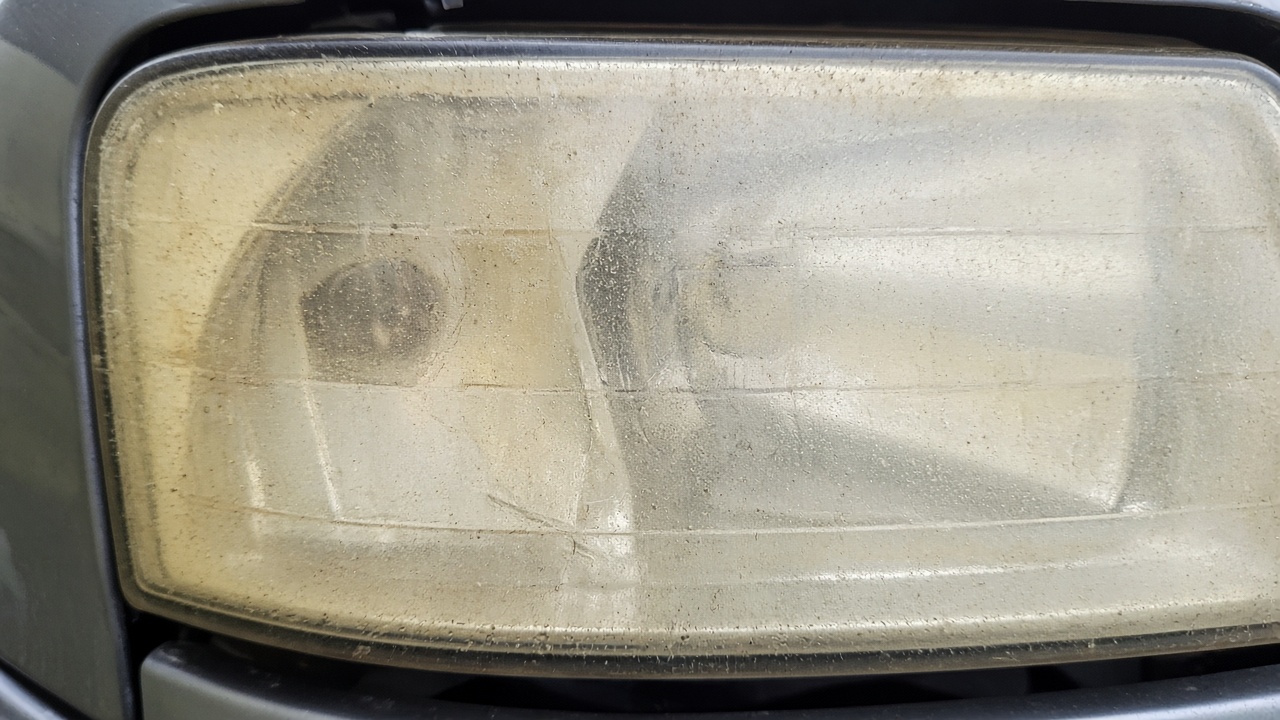
Cloudy, yellowed headlights are more than a cosmetic problem. A hazy lens scatters and blocks light, so you see less of the road at night and in the rain. When your headlights start to fade, you have two basic options: restore the lens you have or replace the headlight assembly. The right choice depends on what is actually wrong with the light.
Here is how to tell the difference, what each option can and cannot fix, and when a damaged headlight is really part of a collision repair.
Why headlights get cloudy
Most modern headlight lenses are polycarbonate plastic with a factory UV-protective coating. Years of Texas sun break that coating down. Once it is gone, the plastic itself oxidizes, turning yellow, hazy and rough to the touch. Road grit, harsh chemicals and automatic car washes can speed things up. Because the damage starts on the outside surface, it is often correctable, at least for a while.
What headlight restoration does
Restoration removes the damaged outer layer of the lens and replaces the protection the factory coating used to provide. A thorough restoration usually involves:
- Masking the paint and trim around the headlight
- Wet-sanding the lens in progressively finer stages to remove oxidation
- Machine polishing to bring back clarity
- Applying a new UV-resistant clear coat so the yellowing does not return right away
Restoration works well when the haze is on the outside of the lens and the lens and housing are otherwise intact.
Restoration kits vs. a thorough job
Store-bought kits can improve mildly hazy lenses, but results vary. Many kits skip a durable UV coating, so a freshly sanded lens can yellow again quickly, sometimes faster than before. Sanding too aggressively or unevenly can leave swirl marks that scatter light. If you try a kit, follow the directions closely and finish with a UV-protective coating.
When replacement is the right call
No amount of polishing fixes damage inside or through the lens. Replacement is usually the better option when you see:
- Cracks or chips in the lens, which let water and dirt in
- Moisture or condensation inside the headlight that does not clear
- Haze or discoloration on the inside of the lens
- Broken mounting tabs or a housing that no longer sits tight against the body
- Damaged reflectors or internal parts that look burnt, peeling or dull
- A lens that has been restored before and has worn through again
When a damaged headlight is part of a collision repair
Even a minor front-end fender bender can crack a headlight, break its mounting tabs or knock it out of alignment, and the damage often extends to the bumper cover, grille, fender and brackets behind it. In that case the headlight is not a standalone fix: it is part of a collision repair that should restore everything around it so the new light fits and seals correctly.
At SS Paint & Body Repair, collision repair starts with a careful, transparent assessment and thorough damage documentation, uses OEM parts and factory-grade materials, and includes direct communication with your insurance company. Panels, bumpers and trim are refinished with a computerized paint match. If a cracked bumper came along with the broken headlight, we handle that too. Not sure what to do right after an accident? Read what to do after a car accident in Conroe.
Thinking about an upgrade?
Some drivers replacing a light decide it is a good time to add lighting. Our accessories service includes LED lighting and light-bar installation with clean wiring and a warranty on installation workmanship. Make sure any lighting you add is legal for road use.
Check your aim after any headlight work
After restoring or replacing a headlight, make sure it is aimed correctly. Poorly aimed headlights shorten how far you can see and can glare into oncoming drivers' eyes. A quick check against a flat wall at night will show whether both beams sit at the same height.
How to keep headlights clear longer
- Park in a garage or in shade when you can
- Wash lenses gently with car soap and a soft cloth, not abrasive pads
- Avoid harsh solvents and degreasers on the lenses
- Keep an eye on new haze so you can address it before it gets severe
Frequently asked questions
Is headlight restoration worth it?
For lenses with surface haze and no cracks or internal moisture, a thorough restoration with a UV coating can bring back much of the clarity. If the damage is inside the lens or the housing is broken, replacement is the better value.
How long does headlight restoration last?
It depends on the products used, sun exposure and care. A restoration that skips the UV protective coating tends to yellow again much sooner.
Why is there water inside my headlight?
Persistent moisture usually means a crack, a failed seal or a broken vent. Restoration will not fix it, and the headlight typically needs repair or replacement.
Will insurance cover a headlight broken in an accident?
Collision damage is generally handled through the applicable auto policy. Coverage depends on your policy, so check with your insurer. We communicate directly with insurance companies during collision repairs.
Can you match my bumper paint if it was damaged too?
Yes. We refinish bumpers, panels and trim with a computerized paint match to blend with your original finish.
Front-end damage? Get a free estimate
SS Paint & Body Repair is a family-owned, I-CAR Gold Class certified collision repair shop at 335 Woodland Hills Drive in Conroe, serving The Woodlands, Montgomery, Spring, Magnolia and Willis. Every repair is backed by our limited lifetime workmanship warranty. Request a free estimate or call (936) 581-4556.